

In Queen Elizabeth II: Her Life in Style at The King’s Gallery, Elizabeth II’s wardrobe re-emerges not simply as an archive of elegance, but as a public language: a way of giving the Monarchy shape, continuity and clarity.
Listen to this article
There are exhibitions that simply gather celebrated garments. This one does something more interesting: it shows how a woman observed by the world for seven decades turned appearance into method. The gowns, tiaras, millinery and accessories on display are not relics of personal taste. They are part of a visual language, built with great care over time. For Elizabeth II, clothing did not merely adorn the role; it helped define it.
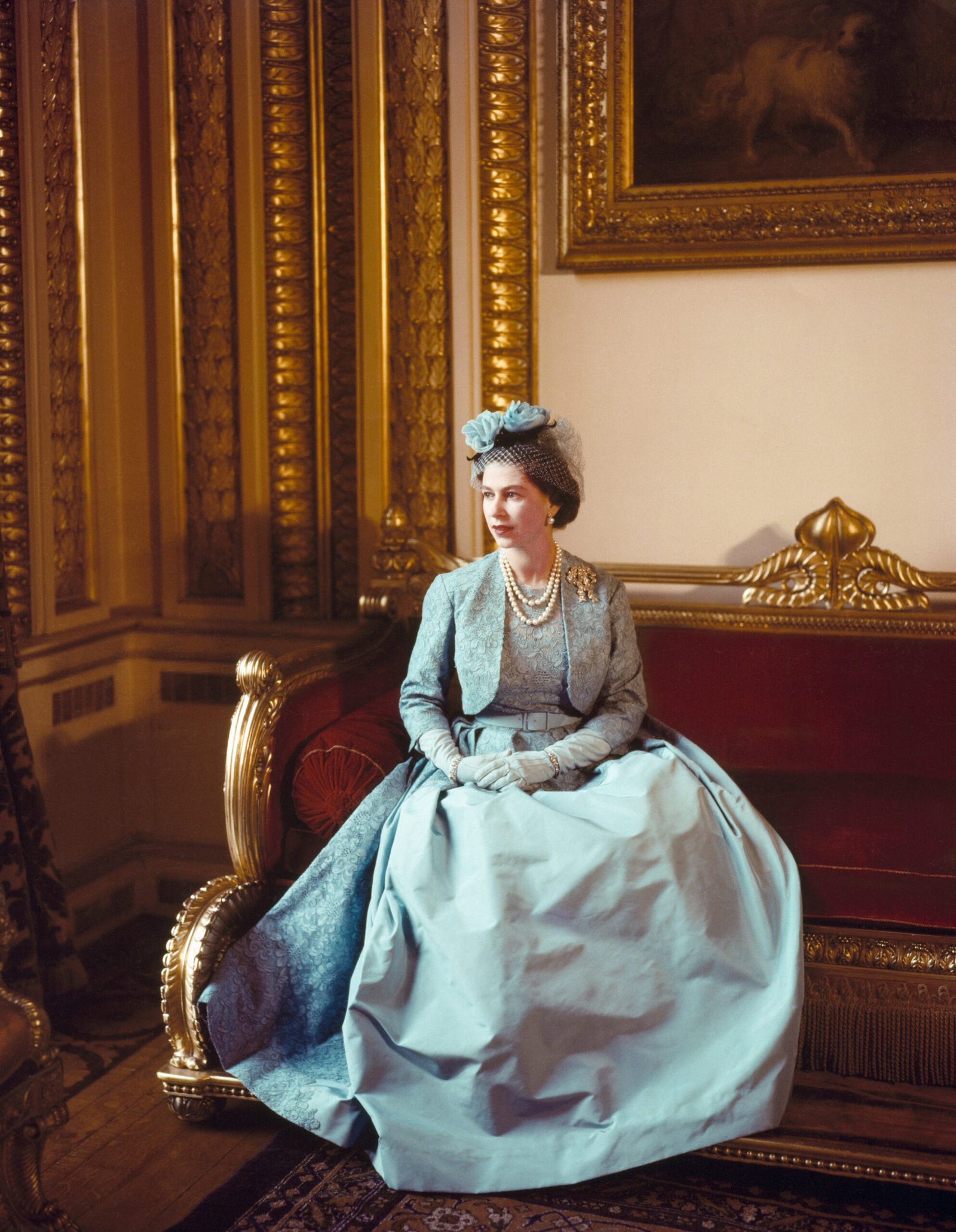
Cecil Beaton’s photograph from Princess Margaret’s wedding in 1960 captures this logic with unusual clarity. The blue Norman Hartnell ensemble and the Claude St Cyr hat belong, in principle, to the register of a family occasion. And yet the image already feels entirely public. There is youth, certainly, but above all there is composition: femininity without fragility, delicacy without excess, a clarity of presence that requires no dramatisation. Even there, the clothes do not simply accompany the moment; they help to organise it.
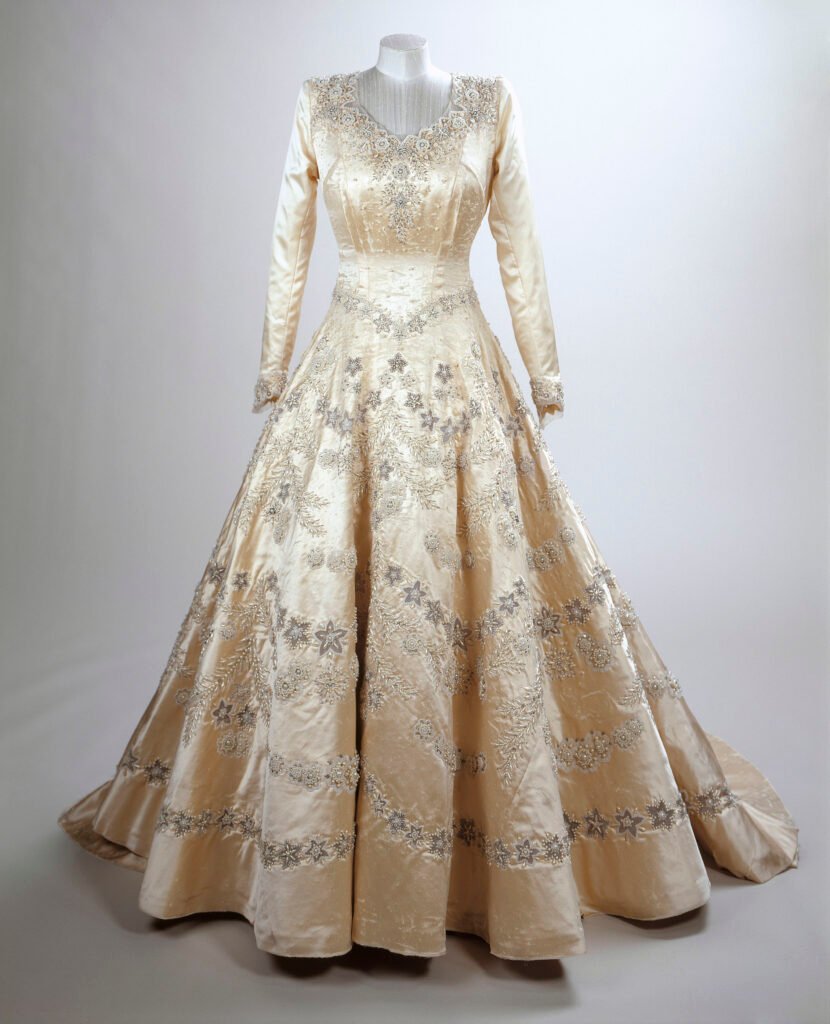
That impression deepens in front of the 1947 wedding gown, also by Hartnell. Few pieces belong so forcefully to the visual imagination of the modern Monarchy. What is striking, however, is not the splendour itself but the discipline of that splendour. Nothing is gratuitous. The embroidery, the structure, the luminous surface, the solemnity of the line: everything works towards an idea of grandeur that never tips into noise. It is a piece that explains why Hartnell remains so central to this story. In his hands, magnificence never lost its line.
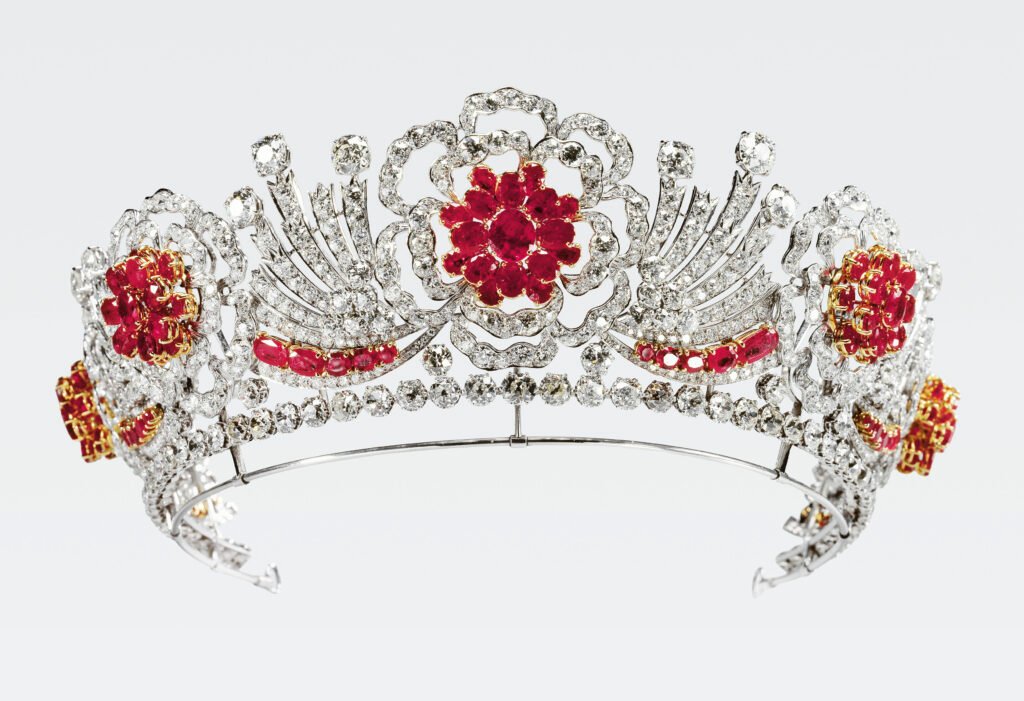
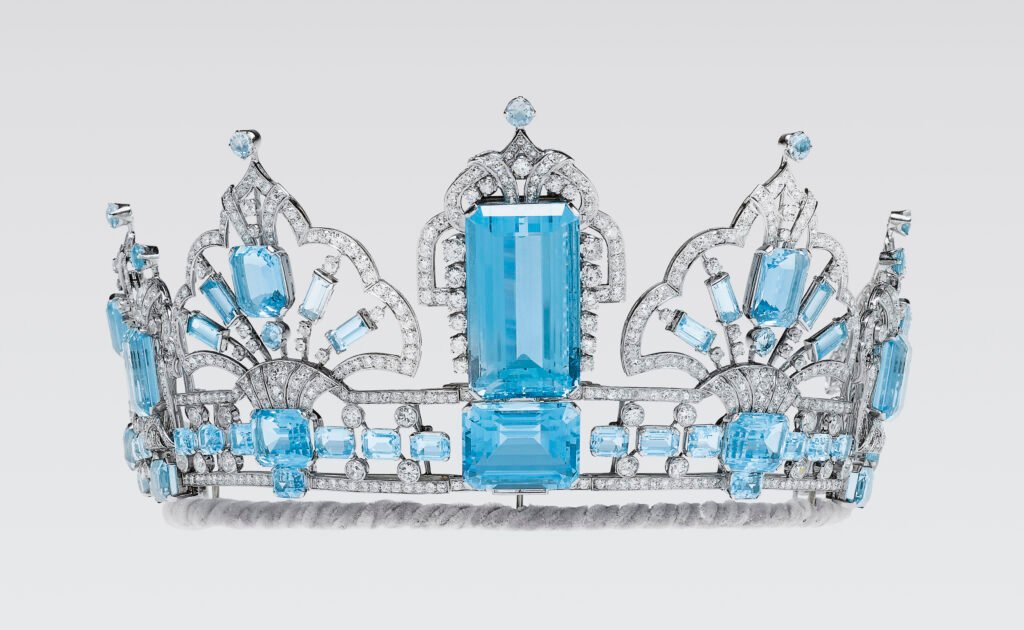
The tiaras introduce another modulation of the same language. The Burmese Ruby Tiara and the Aquamarine Tiara, both by Garrard, do not function merely as high-impact jewellery; they function as studies in intensity. The first carries a warmer, more assertive energy. The second has a cooler clarity, almost crystalline. Seen in sequence, they suggest that even brilliance obeyed a logic of legibility. In Elizabeth II’s wardrobe, ornament rarely interrupted the reading; it served to refine it.
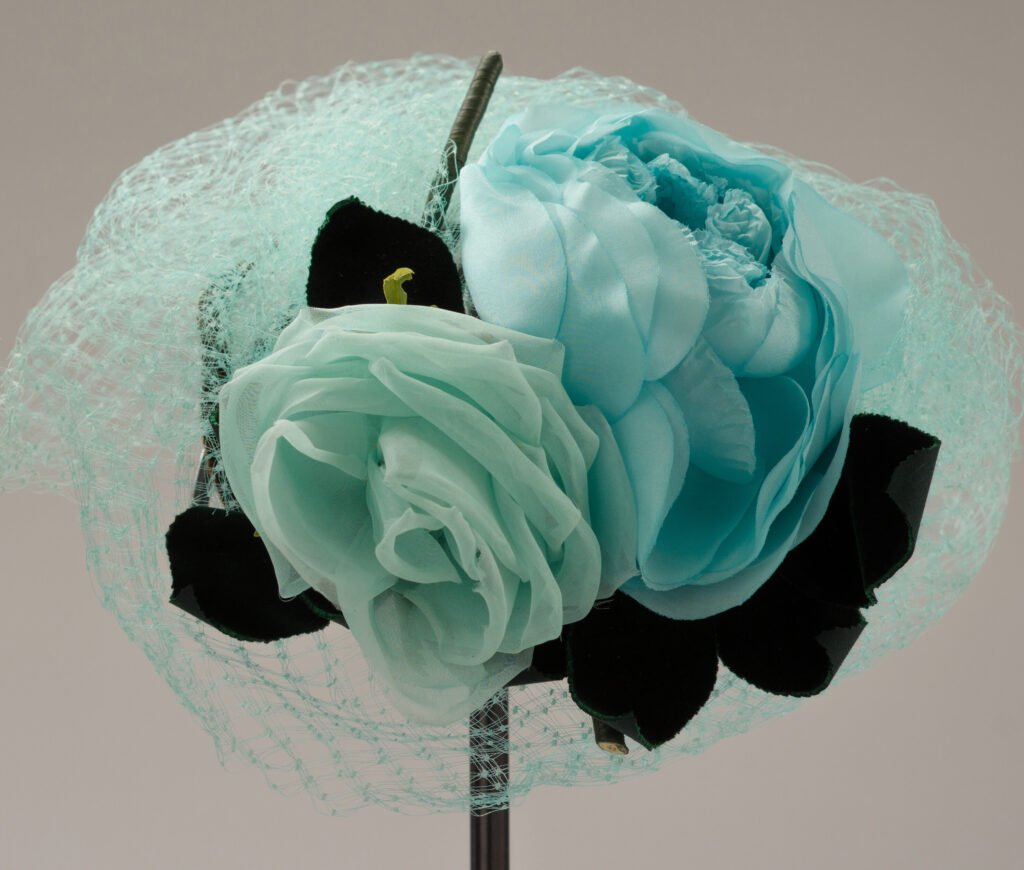
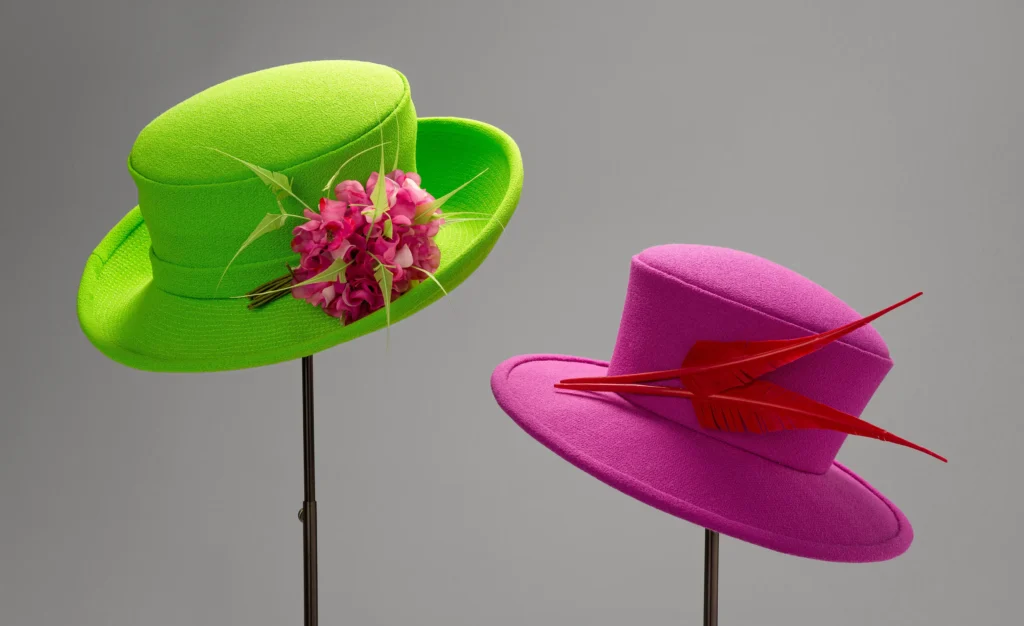
Perhaps the millinery makes this clearest to the contemporary eye. The vivid hats by Rachel Trevor Morgan show that colour, in the Queen’s case, was never a late indulgence. It was an instrument of presence. The acid green, the deep rose, the clean silhouette above the face: all of it suggests that visibility and elegance were never in competition. Elizabeth II did not need to surprise; she needed to be recognised. Her hats functioned as a visual signature, and as proof that colour could be alive without becoming strident.
It is at this point that the exhibition ceases to be a succession of beautiful objects and begins to speak of behaviour. Fashion, here, is not surface: it is a way of occupying space, managing the attention of others and stabilising a public image. The gown, the jewel, the hat, the handbag, the glove, the tartan: none of these read as isolated choices. They read as decisions about how to be understood. And perhaps that is the distinction between elegance and public dress: the former may be self-contained; the latter must produce meaning.
That meaning extended outward into the makers who formed the material infrastructure of her reign. Burberry supplied not only protection from the elements but a particular grammar of British identity: tailored gabardine, silk scarves, refinement grounded in practicality. Launer London provided the handbags whose stable silhouettes anchored thousands of engagements over more than half a century. Kinloch Anderson, with its ties to the Old Stewart tartan, reminds us that royal dress was also shaped by textile tradition, landscape and Scottish continuity. Even Fulton’s transparent birdcage umbrella, precisely trimmed to match each outfit, ensured that the Queen remained visible to crowds in inhospitable weather. Together, they helped turn appearance into continuity.
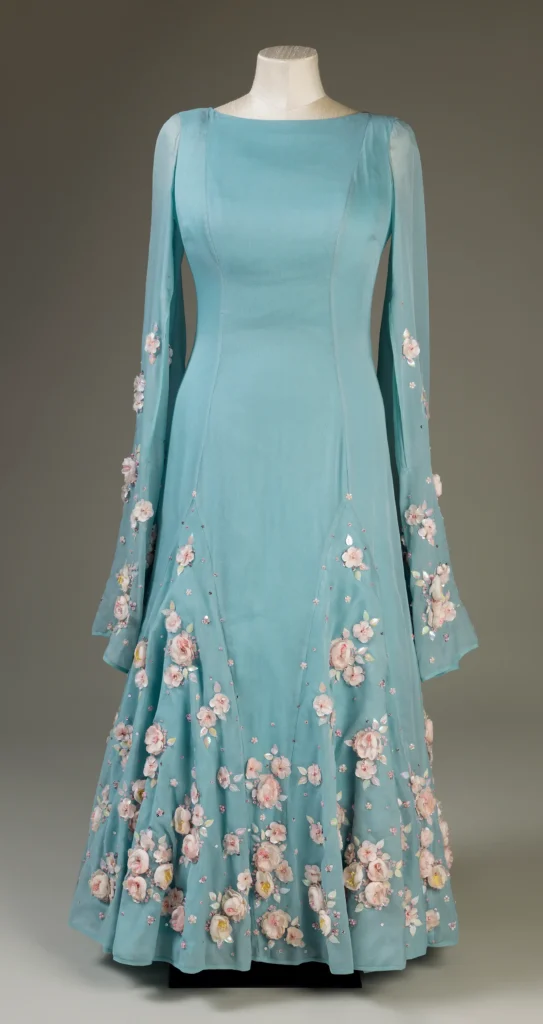
When the exhibition turns to the State dresses, this intelligence acquires a subtler register still. There are pieces conceived in dialogue with the diplomatic settings in which they were worn: Karachi, the Netherlands, Japan, China. National colours, floral references, discreet cultural echoes. Their interest lies not in easy exoticism but in the delicacy with which they acknowledge the other without dissolving into it. In those moments, dress ceases to be image and approaches something closer to attention.
Queen Elizabeth II: Her Life in Style is finally less compelling as a confirmation that the Queen dressed well than as a demonstration of what dressing, in her case, actually did: it gave the Crown visual clarity. The clothes appear not as ornaments to history but as one of its languages. Elizabeth II re-emerges as someone who understood, with rare precision, that form can steady an institution.
Queen Elizabeth II: Her Life in Style runs at The King’s Gallery, Buckingham Palace, from 10 April to 18 October 2026. The accompanying volume, Queen Elizabeth II: Fashion and Style by Caroline de Guitaut, is published by Royal Collection Trust.