
Loud, restless and exhilarating, Iguazu does not offer stillness. It restores something more valuable: attention.
Iguazu Falls does not calm the senses. It wakes them.
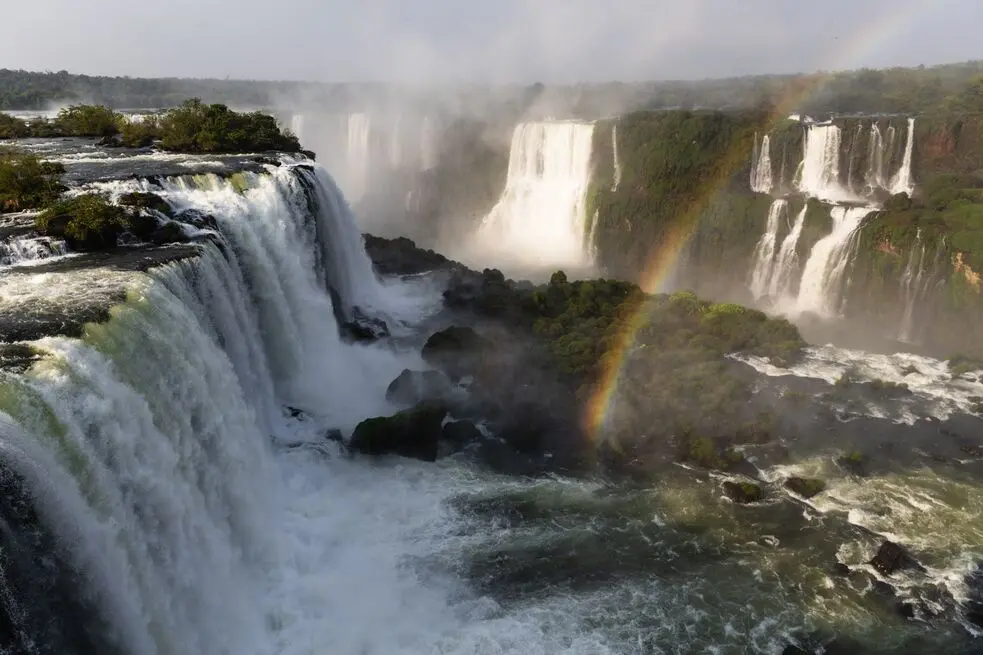
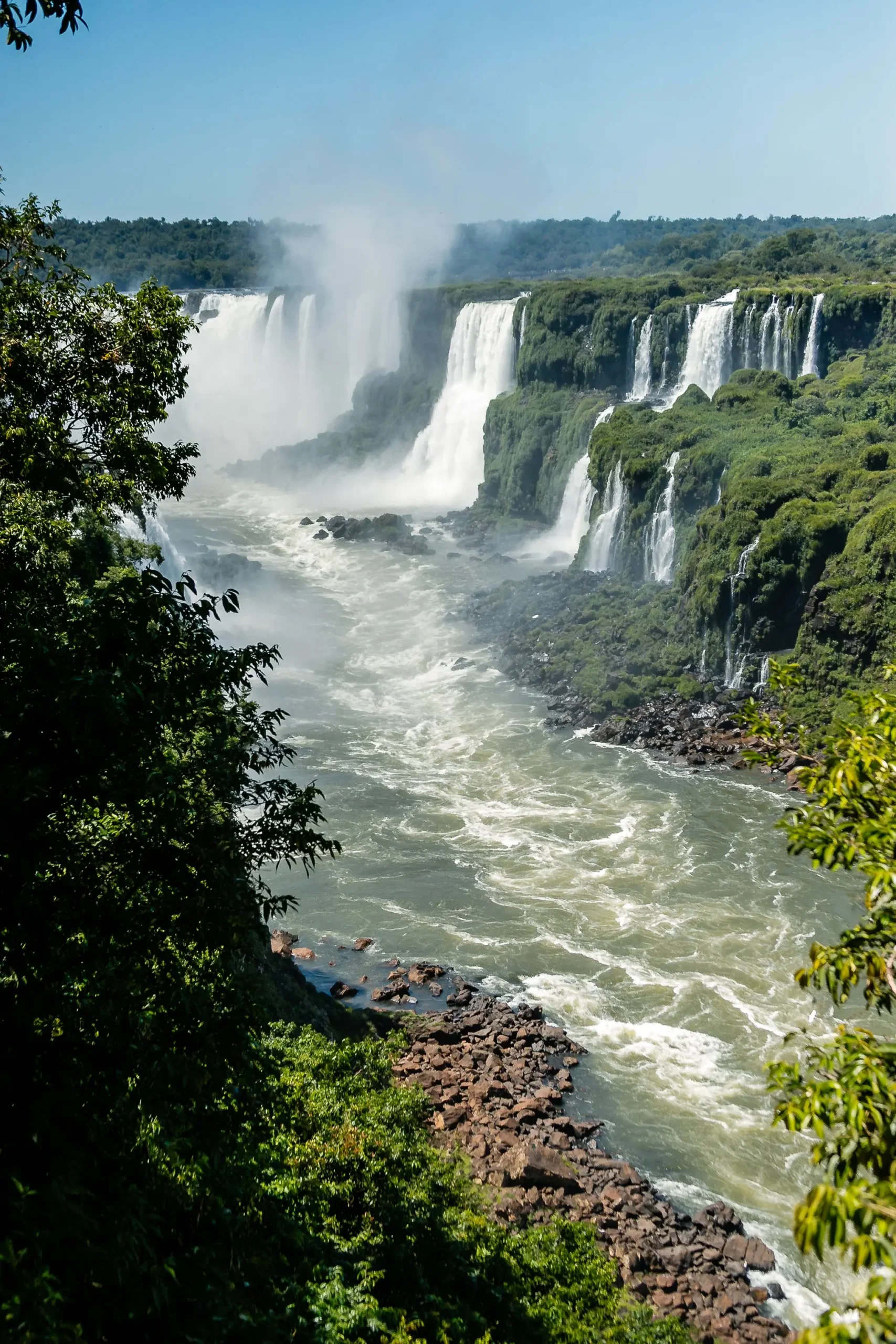
Before the full panorama appears, the sound has already changed the atmosphere. The air grows cooler, mist settles on the skin and the distant roar becomes something felt as much as heard. Then the forest opens and the falls emerge — not as one immaculate view, but as water in every direction.
The camera is useful but incomplete. It records the breadth of the landscape while missing the vibration in the chest, the moisture gathering on eyelashes and the moment when the roar turns conversation into gesture.
Foz do Iguaçu lies within the tri-border region of Brazil, Argentina and Paraguay, where countries, languages and daily journeys meet. Near the falls, however, borders feel almost incidental. Water and forest continue according to a geography of their own.
Iguazu Falls and the Atlantic Forest
The Atlantic Forest is not a backdrop. It is part of the experience.
Dense vegetation reaches towards the pathways; birds move through the canopy; coatis cross the ground with the confidence of animals entirely at home. The falls provide the spectacle, but the forest gives them atmosphere, depth and life.
The route through Iguaçu National Park reveals the landscape gradually. One section appears through the trees, another beyond a wide opening, another half-concealed by clouds of spray. Light alters the water from one moment to the next, while mist repeatedly erases and redraws the view.
The temptation is to move quickly, collecting photographs before continuing to the next platform. Iguazu resists that kind of efficiency.
Twenty minutes may be enough to photograph the falls. It is not enough to understand their rhythm.
Once the first astonishment subsides, other details begin to register: leaves moving beneath the spray, birds briefly crossing the white water and small rainbows forming before disappearing again. The landscape is never static. Remaining in one place reveals more than rushing towards another.

Its beauty is energising without being tranquil. The falls are loud, restless and forceful. What they restore is not silence, but attention.
That distinction matters. Iguazu is not a retreat designed to soften every sensation. It reawakens them. Sound, humidity, movement and scale pull the mind away from distraction and back into the physical world.
The Iguazu Falls boat ride
From the walkways, the falls can still be contemplated. From the river, detachment becomes impossible.
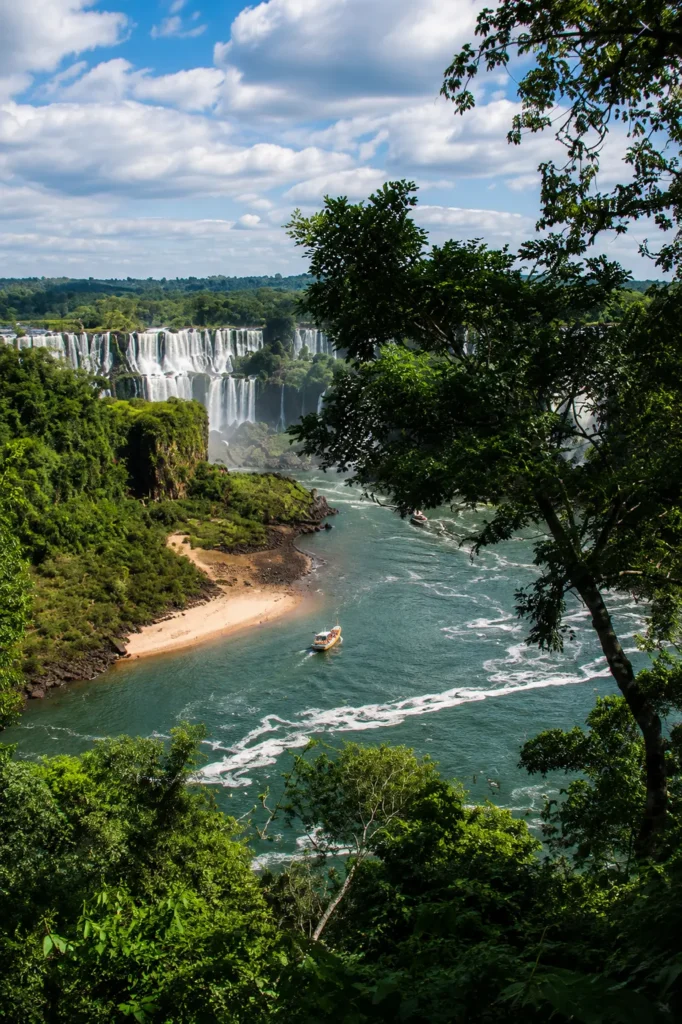
The boat journey begins beneath the forest canopy, with speed, anticipation and the distant view of white water against dark rock. From there, the cascades appear almost orderly. That impression does not last.
The roar grows heavier. Spray fills the air. The distinction between river and waterfall begins to disappear.
By the time the boat enters the falling water, sunglasses are useless, clothes are heavy and laughter is involuntary.
Eyes close instinctively. Breath catches.
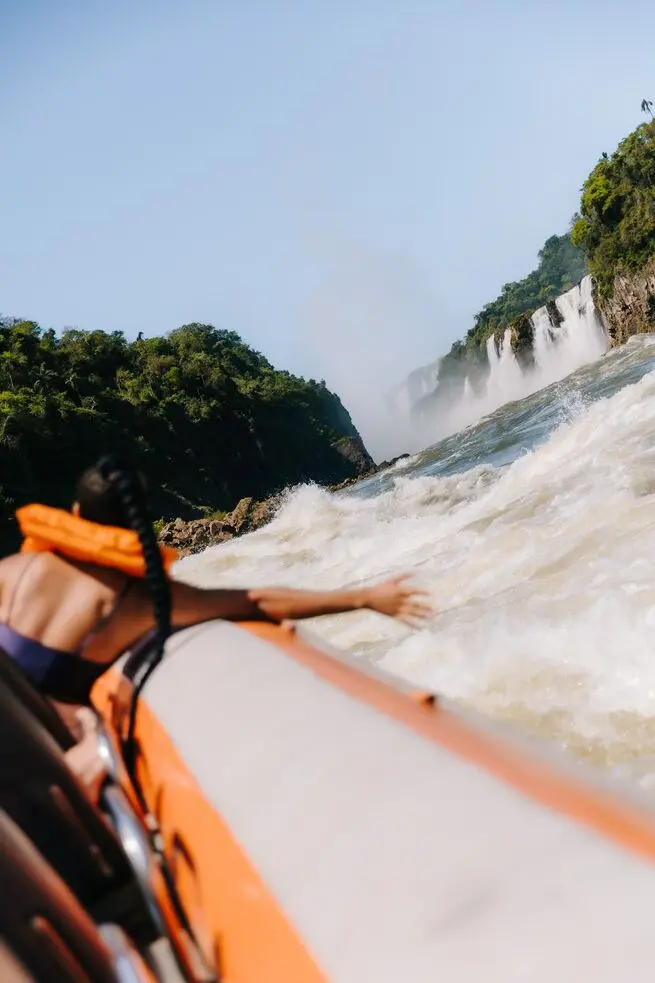
There is no elegant response to the force of the water. For a few seconds, thought gives way to sensation: cold spray, noise, movement and the effort to draw breath before the next rush arrives.
It is exhilarating and, quite literally, breathtaking.
The experience changes the relationship with the landscape. From a viewpoint, the power of Iguazu can be admired. From the boat, it must be felt. The water reaches the body and removes the safe distance from which nature is usually observed.
There is pleasure in that surrender, but also humility.
Nature is not presented as scenery or decoration. It sets the terms.
Staying at Hotel das Cataratas
Set within the national park, the rose-pink Hotel das Cataratas, a Belmond Hotel, is one of the destination’s most recognisable architectural presences.
Its elegant interiors, gardens and distinctive façade create a beautiful contrast with the surrounding Atlantic Forest. As the only hotel located inside the Brazilian park, it is also an especially appealing option for travellers who want proximity to shape the experience rather than simply shorten the journey.
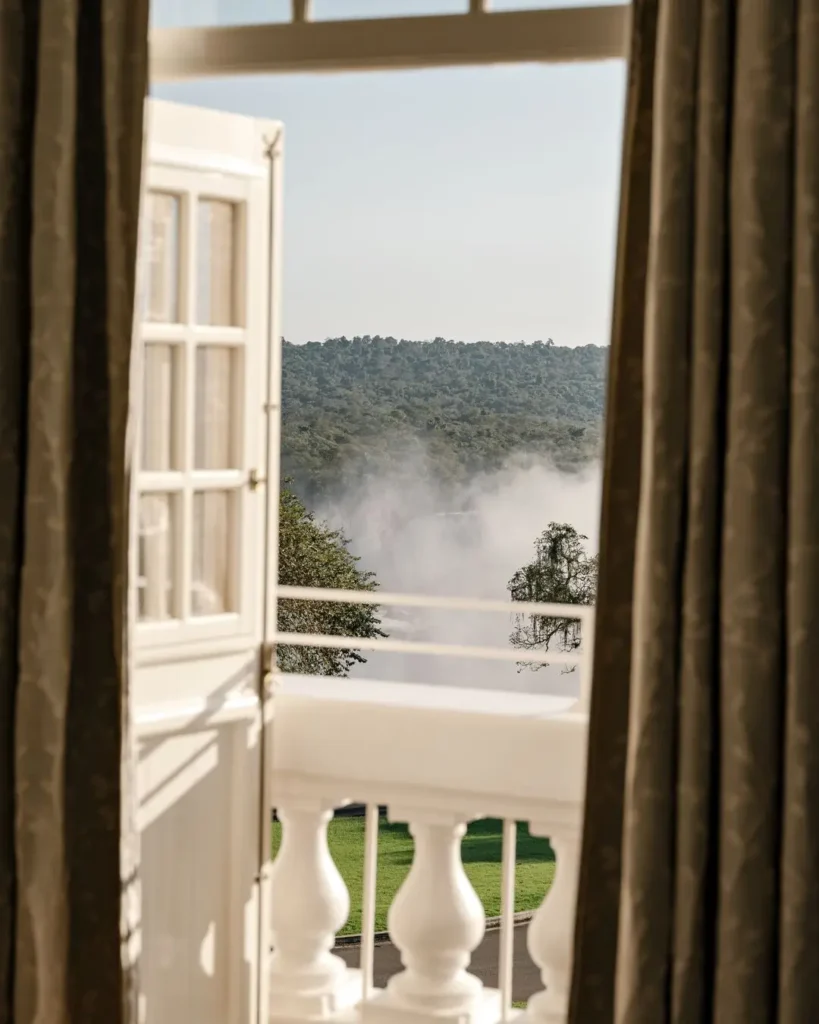
Staying there allows the landscape to become part of the rhythm of the day. Guests can encounter the falls beyond the busiest public hours, when the paths are quieter and the relationship between water, forest and light feels more intimate.
The hotel is attractive in its own right, but its exceptional location elevates it. Comfort and refinement are joined by something no city property can reproduce: the possibility of remaining within this extraordinary natural setting.


Much of modern life is experienced at reduced scale — through screens, interiors, appointments and environments arranged for convenience. Iguazu reverses the proportion.
The falls do not ask the visitor to withdraw from the world. They make the world immediate again.
The lasting image is not necessarily the perfect panorama. It is the body within the spray: eyes closed, breath caught, surrounded by water powerful enough to interrupt every other thought.
For a moment, nature is no longer somewhere one has travelled to see.
It is where one belongs.