

There are plenty of skirts at London Fashion Week. That, on its own, is not particularly interesting.
The skirt never disappeared, and declaring its return would be a stretch. What has been more noticeable over the first two days of the Spring/Summer 2027 shows is how little agreement there seems to be about what a skirt should look like now.
Harris Reed Looks Back
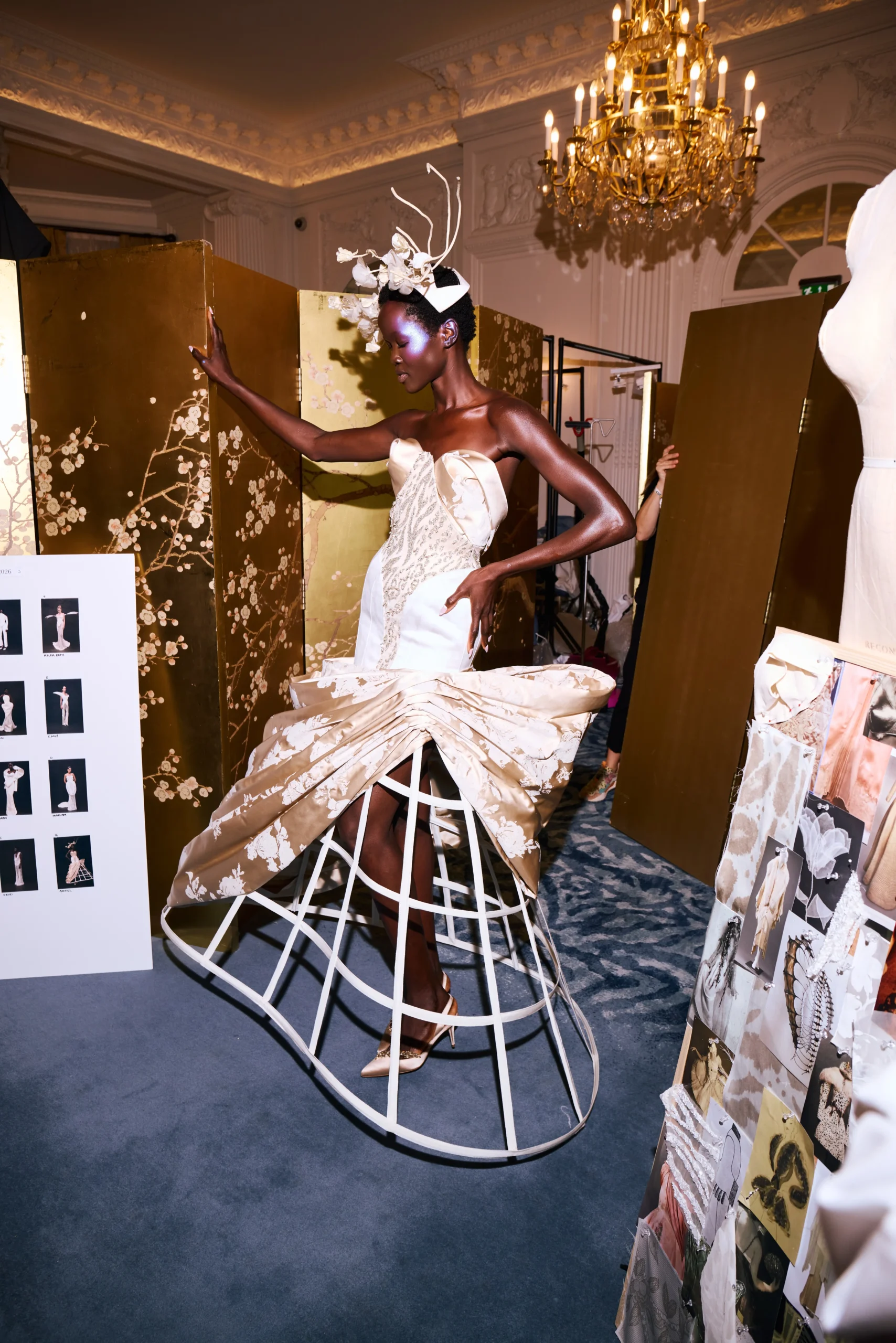
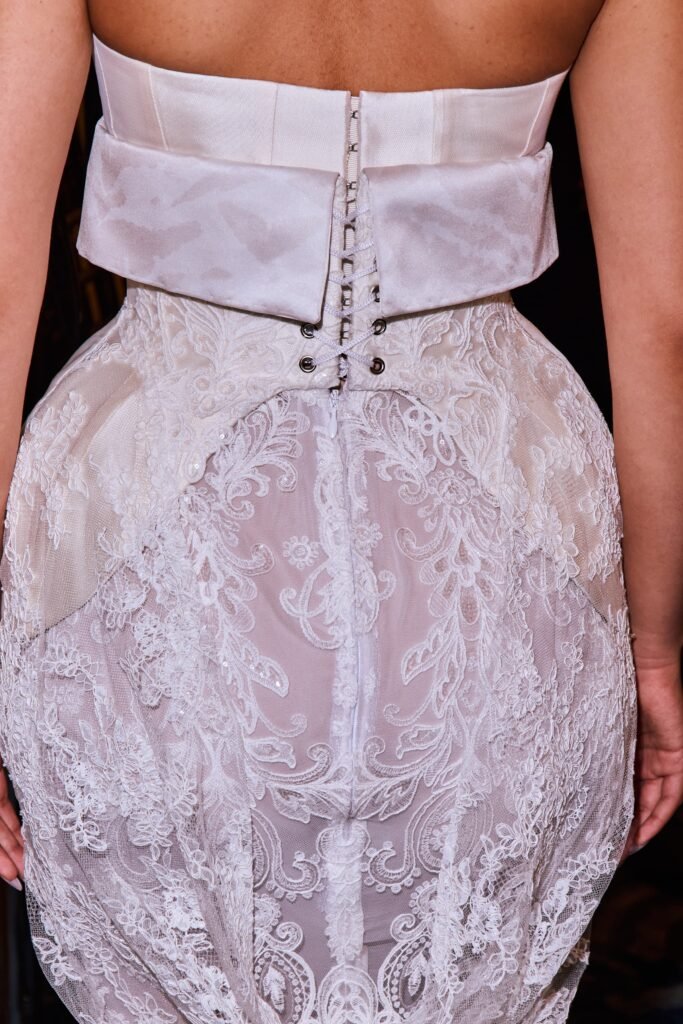
At Harris Reed, the skirt belongs to a collection looking backwards before moving forward. Reed revisited ideas from the previous 11 seasons of his label for an almost entirely white collection, shown salon-style in Knightsbridge.
Familiar elements of his work remain — corsetry, cages, dramatic construction — but the materials have more room to speak this time. Organza, silk brocade and duchesse satin were cut and pieced into skirts and trousers, giving some of the collection’s grandest ideas a different sort of ease.
H&M Plays With Proportion
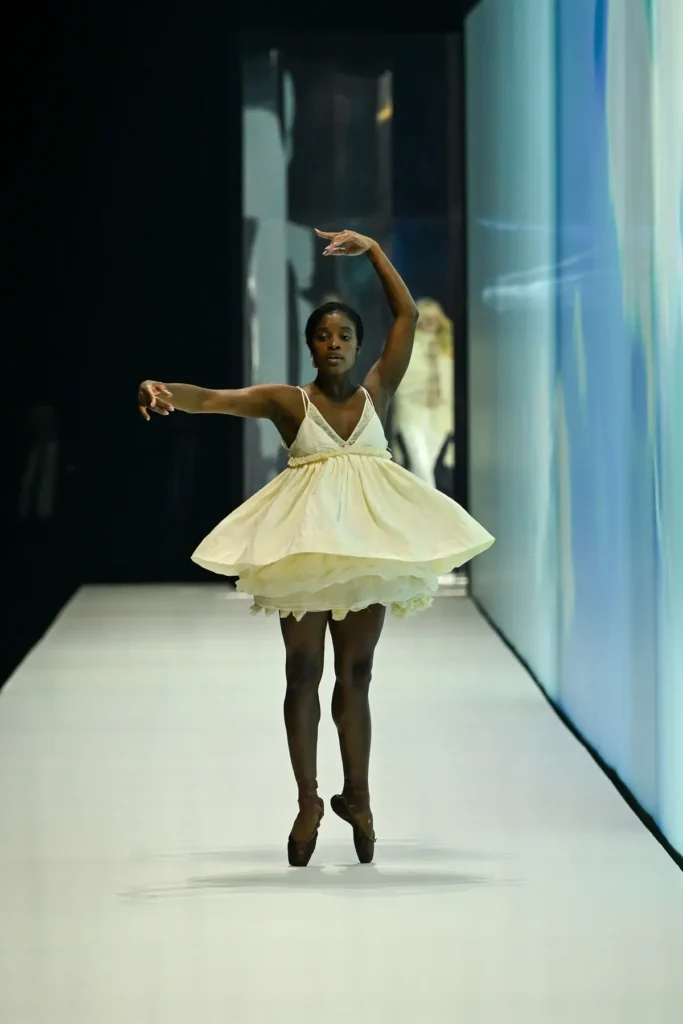
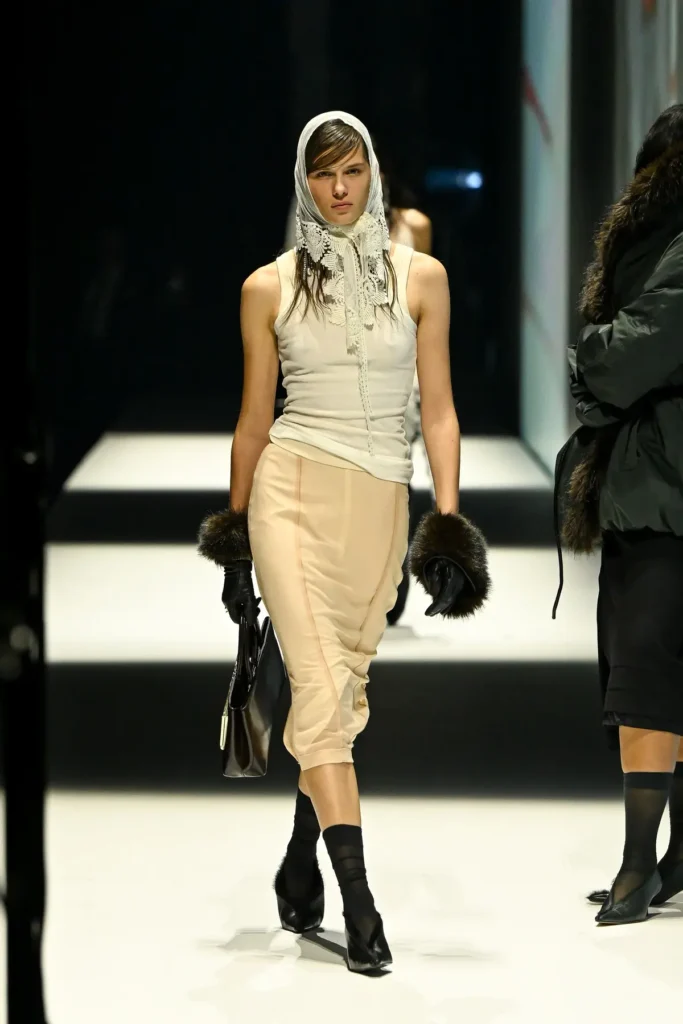
H&M’s Thursday night show was a very different proposition: part fashion show, part digital experiment, created with Nick Knight and SHOWstudio. The clothes were surrounded by technology, imagery and performance rather than presented as a conventional runway procession.
Against all of that production, some of the simplest fashion ideas still registered. Volume around the hips, short skirts, longer narrow shapes, black against cream. A skirt did not need to be the loudest thing in the room to hold its own.
Joyce Bao, meanwhile, arrived on the official London schedule with a womenswear presentation rather than a traditional catwalk. One of the newer names on the schedule, Bao offered another context in which to look at silhouette away from the scale of the evening shows.
Petra Fagerström Reworks the Familiar
Perhaps the most interesting conversation with the skirt came the following morning.
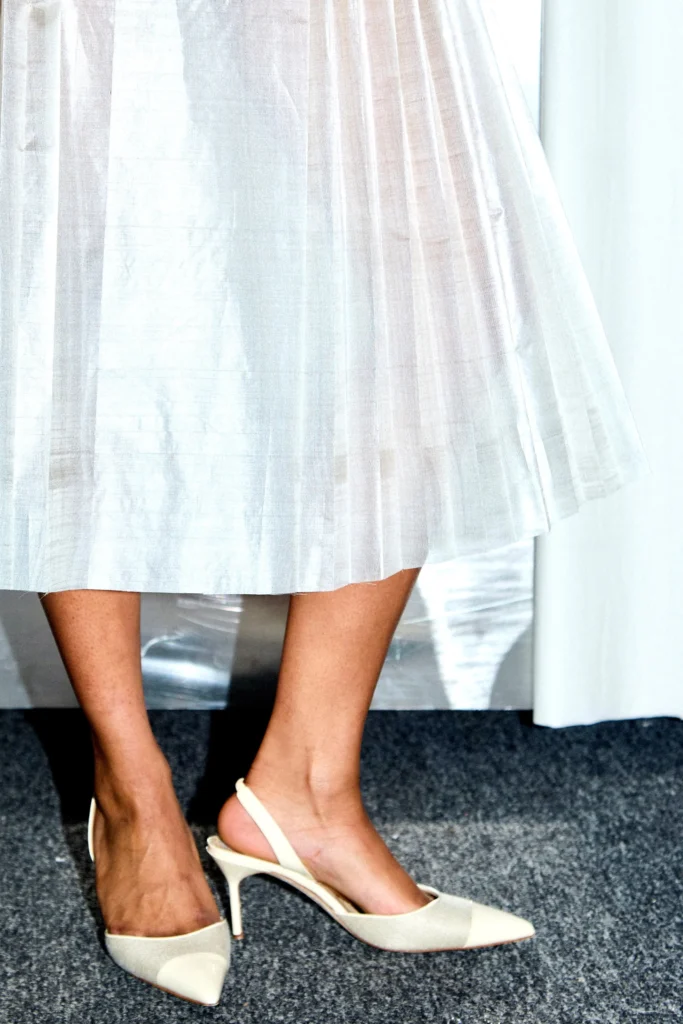
Petra Fagerström called her collection Swedish Summer. Her references included the femininity of the 1950s — knife pleats, circle skirts, lingerie and sharply defined waists — but nostalgia was never really the destination.
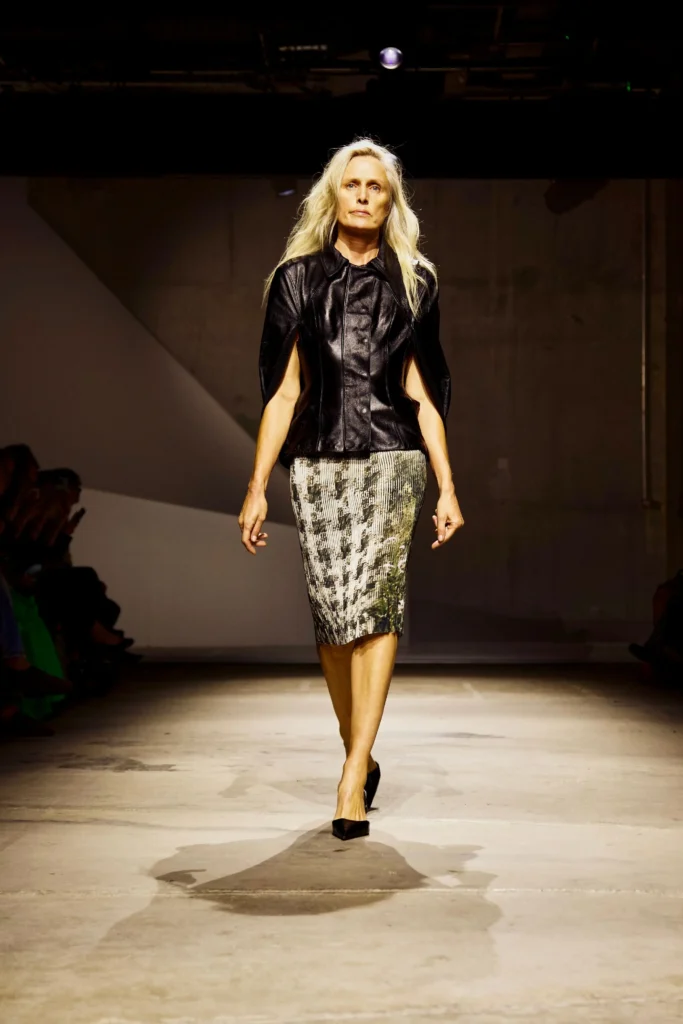
A trench coat opens to reveal a black leather suit with a knife-pleated skirt, only for the pieces to turn out to be fused into a single garment. Elsewhere, apparently straightforward pleated dresses change as the wearer moves.
Fagerström’s work makes the contradiction particularly visible. She can be attracted to something pretty without treating femininity as a fixed set of rules. The old shapes are still recognisable; what happens to them is another matter.
So, Is the Skirt Back?
Probably the wrong question.
A pleated skirt can still look beautifully proper. Another can be built around a cage. One can move like a ballet costume; another barely moves at all.
The interest isn’t in deciding which length has won the season. London, so far, is offering something much less tidy than that.
And considerably more fun.